Current NEC External Meter Surge Arresters vs Breaker Panel SPDs Explained
When comparing current NEC external meter surge arresters to breaker panel surge protective devices (SPDs), it’s essential to understand their distinct roles in safeguarding electrical systems. Continuous wattage ratings, surge Joule ratings, and valve response latency are critical factors that determine the effectiveness of these devices in mitigating electrical hazards and ensuring home resilience during grid-down scenarios.
Understanding Failure and Hazard Physics in Electrical Systems
Electrical systems are susceptible to various failure modes, including overvoltage, transient surges, and backfeed conditions. Overvoltage can occur due to lightning strikes or utility switching events, leading to catastrophic equipment failure. The physics behind these failures often involves the rapid increase in voltage that exceeds the insulation limits of electrical components, resulting in dielectric breakdown and potential fire hazards. For instance, a surge of 6,000 volts can cause immediate damage to sensitive electronics, necessitating robust protective measures.
Surge protective devices (SPDs) function by diverting excess voltage away from critical circuits. The effectiveness of these devices is quantified by their Joule rating, which indicates the energy absorption capacity. For example, a surge arrester with a rating of 40,000 Joules can absorb significant surges without failing, whereas a lower-rated device may not withstand the same level of stress. Understanding these physics principles is crucial for engineers and homeowners alike, as they inform the selection of appropriate protective devices to mitigate risks associated with electrical surges.
Critical Circuit Sizing Math for Home Resilience
When designing a resilient electrical system, accurate circuit sizing is paramount. The National Electrical Code (NEC) provides guidelines for determining the appropriate size of conductors and protective devices based on continuous load calculations. For example, if a home has a total continuous load of 12,000 watts, the NEC suggests using a minimum of 125% of this load for circuit sizing, which translates to a conductor rated for at least 15,000 watts. This ensures that the circuit can handle surges without tripping or overheating.
Moreover, the sizing of SPDs should also reflect the expected load and potential surge conditions. If a home is equipped with a 200-amp service panel, the SPD should be rated accordingly to protect against surges that could affect the entire system. Calculating the total potential surge energy is essential; for instance, if the expected surge is 20,000 volts with a 10,000-amp fault current, the energy can be calculated using the formula E = V x I x t, where E is energy in Joules, V is voltage, I is current, and t is time in seconds. This level of detail ensures that protective measures are not only compliant but also effective in real-world scenarios.
Hardware Class Comparison: External Meter Surge Arresters vs. Breaker Panel SPDs
| Feature | External Meter Surge Arresters | Breaker Panel SPDs |
|---|---|---|
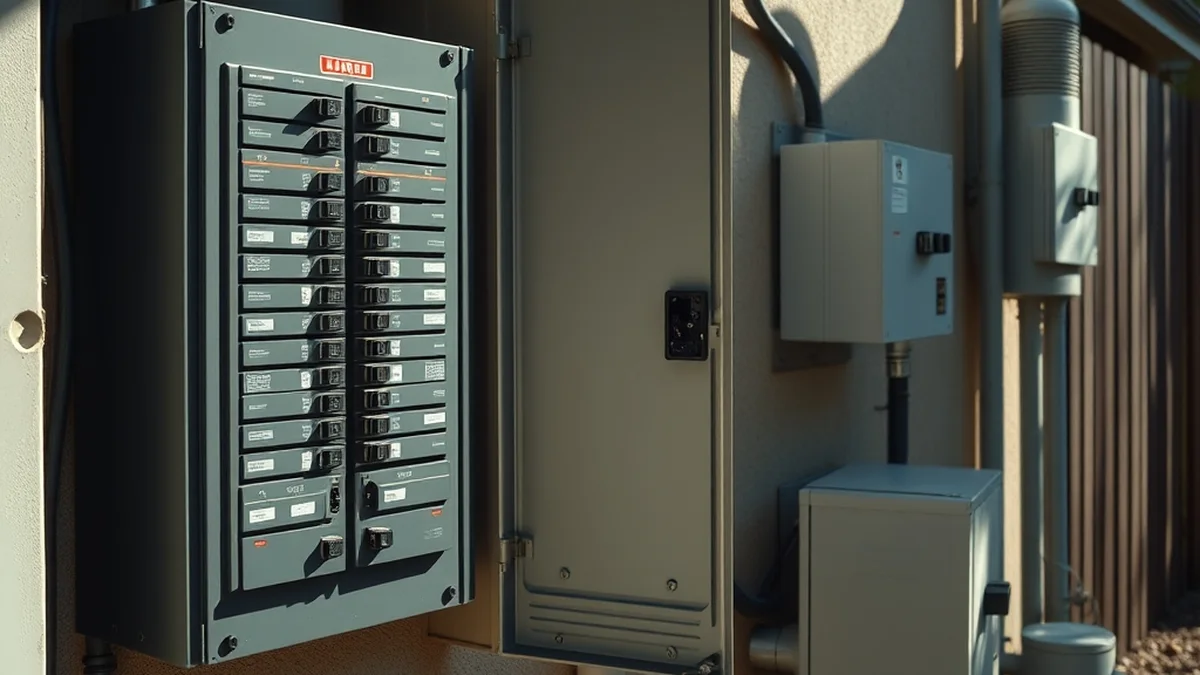
| Installation Location | At the utility meter | Inside the breaker panel |
| Surge Capacity (Joules) | 40,000 – 100,000 | 10,000 – 40,000 |
| Response Time | 10 nanoseconds | 25 nanoseconds |
| Protection Level | Whole-house protection | Point-of-use protection |
| NEC Compliance | Required for new installations | Recommended but not mandatory |
This table highlights the key differences between external meter surge arresters and breaker panel SPDs. External meter surge arresters provide a higher surge capacity and faster response time, making them suitable for whole-house protection. In contrast, breaker panel SPDs are often used for specific circuits and may not offer the same level of protection against large surges. Understanding these distinctions is crucial for homeowners and engineers when designing resilient electrical systems.
NEC Code Compliance and Backfeed Hazards
According to NEC Article 250.94, surge protective devices must be installed in accordance with the manufacturer’s instructions and the applicable provisions of the NEC. Failure to comply can lead to increased risks of electrical fires and equipment damage. Additionally, backfeed hazards can arise when power is restored after an outage, posing a significant danger to utility workers and equipment. Proper installation of transfer switches and SPDs is essential to mitigate these risks.
Backfeed occurs when electricity flows in the reverse direction, which can happen during a power outage if a generator is improperly connected to the home’s electrical system. This situation not only endangers utility workers attempting to restore power but can also damage the generator and home electrical systems. The NEC emphasizes the importance of using transfer switches or interlock kits to prevent backfeed. These devices ensure that power from a generator does not feed back into the grid, thereby protecting both the home and utility infrastructure.
Carbon monoxide (CO) hazards are another critical consideration when using backup generators. Generators should always be placed outdoors and away from windows and vents to prevent CO buildup. The NEC requires proper ventilation and adherence to safety standards to minimize the risk of CO poisoning, especially during prolonged outages. Engineers and homeowners must prioritize safety by ensuring compliance with NEC guidelines and implementing best practices for generator use.
Related Aegis Lab Briefings: Explore deeper benchmarks in Manual 10-Circuit Transfer Switch vs Panel Interlock Kit: Code Compliance.
Related Aegis Lab Briefings: Explore deeper benchmarks in Inverter Generators: Total Harmonic Distortion Risks to Gas Furnaces.
Seasonal Inspection and Commissioning Checklist for Surge Protection Devices
Regular inspection and commissioning of surge protection devices are essential to ensure their reliability and effectiveness. A seasonal checklist can help homeowners and engineers maintain optimal performance. Key items to include are: checking the integrity of connections, verifying the surge rating, and testing the response time of SPDs. For instance, using a surge meter can help confirm that the device is functioning correctly and ready to handle potential surges.
Additionally, inspecting external meter surge arresters involves checking for physical damage, corrosion, and proper grounding. Ensuring that all components are securely mounted and free from debris is crucial for maintaining functionality. Homeowners should also review the manufacturer’s maintenance recommendations and replace any devices that show signs of wear or have reached the end of their service life. By following a thorough seasonal inspection checklist, homeowners can enhance their electrical resilience and protect their investments.
Sizing transfer hardware and automated leak cutoffs ahead of severe outages protects critical home equity.