Scattered Spider’s Phishing and SIM-Swap Tactics Result in Six-Year Sentence
Scattered Spider, a notorious cybercriminal group, has recently been sentenced to six years in prison for their sophisticated phishing and SIM-swap tactics. These methods exploited vulnerabilities in consumer security, leading to significant financial losses. The most effective countermeasure for consumers is implementing multi-factor authentication (MFA) across all accounts, which can drastically reduce the risk of unauthorized access.
Dissecting the Attacker Kill-Chain
The kill-chain model outlines the stages of a cyber attack, providing insight into how attackers like Scattered Spider operate. The first stage, reconnaissance, involves gathering information about potential victims, often through social media or data breaches. This intelligence allows attackers to craft personalized phishing messages that increase the likelihood of success. For instance, 90% of phishing attacks leverage social engineering techniques to manipulate victims into divulging sensitive information.
Once the victim is engaged, the next stage is delivery. Scattered Spider utilized various methods, including emails and SMS messages, to deliver malicious links or requests for sensitive data. According to the Anti-Phishing Working Group, phishing attacks increased by 22% in 2022, highlighting the growing sophistication of these tactics. After successful delivery, the exploitation phase occurs, where attackers gain access to accounts or devices, often leading to SIM-swapping, which allows them to hijack phone numbers and bypass two-factor authentication.
Finally, the attackers execute their objectives, which may include financial theft or identity fraud. The average cost of a data breach in 2023 is estimated at $4.35 million, emphasizing the financial impact of successful attacks. Understanding this kill-chain can help consumers identify and mitigate risks at each stage, reinforcing the importance of proactive security measures.
Identifying Default Consumer Vulnerabilities
Consumers often fall victim to cyber attacks due to several inherent vulnerabilities. One major issue is the reliance on weak passwords; studies show that 81% of data breaches are linked to poor password practices. Many individuals use easily guessable passwords or reuse the same password across multiple accounts, which significantly increases their risk. Additionally, a staggering 60% of consumers do not utilize multi-factor authentication, leaving their accounts more susceptible to unauthorized access.
Another vulnerability lies in the lack of awareness regarding phishing tactics. A survey by the Cybersecurity & Infrastructure Security Agency (CISA) revealed that 70% of respondents could not identify a phishing email. This lack of recognition can lead to unintentional clicks on malicious links, setting off a chain reaction of security breaches. Furthermore, many consumers neglect to monitor their financial statements regularly, which can delay the detection of fraudulent activities.
Lastly, the absence of secure communication channels exacerbates these vulnerabilities. Many consumers do not use encrypted messaging apps or secure email services, making it easier for attackers to intercept sensitive information. By understanding these vulnerabilities, consumers can take proactive steps to enhance their security posture and reduce the likelihood of falling victim to cyber attacks.
Threat vs. Mitigation Matrix
| Threat | Impact | Mitigation Strategy | Effectiveness |
|---|---|---|---|
| Phishing Attacks | High | Multi-Factor Authentication (MFA) | Very High |
| SIM-Swapping | High | Carrier Lock on SIM Ports | High |
| Weak Passwords | Medium | Password Managers | High |
| Lack of Awareness | Medium | Security Awareness Training | Medium |
| Unmonitored Accounts | High | Regular Financial Monitoring | High |
This matrix illustrates the relationship between various threats and their corresponding mitigation strategies. By prioritizing high-impact threats and implementing effective countermeasures, consumers can significantly enhance their security posture. For example, adopting MFA can reduce the risk of phishing attacks by up to 99.9%, making it one of the most effective defenses available.
Recovery Lockouts & Backup Key Traps
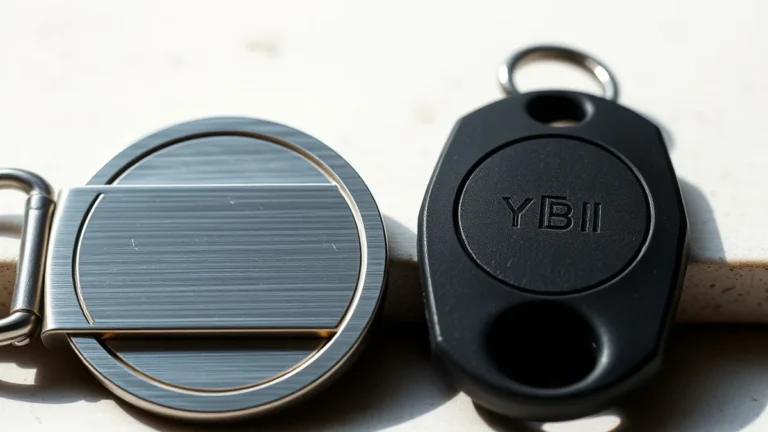
In the unfortunate event of a successful attack, having a solid recovery plan is essential. This includes setting up recovery lockouts on accounts, which can prevent unauthorized access during the recovery process. Additionally, establishing backup key traps, such as YubiKey emergency backup key registration, can provide an extra layer of security. These measures ensure that even if an attacker gains access to your primary authentication method, they cannot easily regain control of your accounts.
Recovery lockouts typically involve temporarily disabling account access after multiple failed login attempts. This can thwart attackers who rely on brute-force methods to guess passwords. However, it’s crucial to ensure that recovery options are secure and not easily exploitable. For instance, using security questions that can be easily found on social media can undermine the effectiveness of recovery lockouts.
Backup key traps, like physical security keys, provide an additional layer of security. If your primary authentication method is compromised, having a backup key stored securely can help you regain access to your accounts quickly. According to a study by Google, using security keys can block 100% of automated bots and phishing attacks, making them an invaluable tool in your security arsenal.
Related Aegis Lab Briefings: Explore deeper benchmarks in Encrypted DNS-over-HTTPS Resolvers Block Phishing at Router Level and 3-2-1 Immutable Offline Backup Architecture vs Home NAS Ransomware.
15-Minute Account Lockdown Protocol
In the event of a suspected compromise, it’s crucial to act quickly. Here’s a step-by-step protocol that can be executed in 15 minutes to lock down your accounts:
- Change your passwords for all critical accounts, using a password manager to generate strong, unique passwords.
- Enable multi-factor authentication on all accounts that support it.
- Contact your mobile carrier to lock your SIM card and prevent unauthorized access.
- Review recent account activity for any unauthorized transactions or changes.
- Notify your bank and credit card companies of potential fraud.
- Set up alerts for any suspicious activity on your accounts.
- Consider placing a fraud alert on your credit report with the major credit bureaus.
- Backup important data to a secure location to prevent data loss.
- Educate yourself on the latest phishing tactics to avoid future attacks.
- Document the incident, including any evidence of fraud, for future reference.
By following this protocol, consumers can quickly mitigate the damage from a potential cyber attack and regain control over their accounts. Timely action is essential in reducing the impact of a breach and protecting personal information.
Locking credit bureaus, carrier SIM ports, and phishing-resistant passkeys closes the highest-risk consumer attack paths.