Charleston County Data Breach: Essential Insights for Residents
Charleston County recently experienced a significant data breach, exposing sensitive information of its residents. As investigations unfold, it is crucial for individuals to understand how attackers operate and what practical steps they can take to safeguard their personal data. The most effective countermeasure is to implement multi-factor authentication (MFA) across all accounts.
Understanding the Attacker Kill-Chain Anatomy
The attacker kill-chain is a systematic approach that cybercriminals use to achieve their objectives, often beginning with reconnaissance and culminating in data exfiltration. In the case of the Charleston County breach, initial indicators suggest that attackers may have exploited vulnerabilities in the county’s network infrastructure. This could involve scanning for open ports or misconfigured servers, which can provide a gateway into the system.
Once inside, attackers typically escalate their privileges to gain access to sensitive databases. This phase often involves the use of phishing emails or social engineering tactics to trick employees into revealing passwords or installing malware. According to a report from the Cybersecurity & Infrastructure Security Agency (CISA), 90% of successful breaches start with a phishing attack. Following privilege escalation, attackers can then execute their final objective: data exfiltration, where they siphon off personal information such as Social Security numbers, financial details, and health records.
Understanding this kill-chain is vital for residents, as it highlights the importance of proactive measures. By recognizing the steps attackers take, individuals can better prepare themselves against potential threats. For instance, implementing security awareness training in households can significantly reduce the risk of falling victim to phishing attempts.
Identifying Default Consumer Vulnerabilities
Consumers often have several inherent vulnerabilities that can be exploited during a data breach. One of the most common is the use of weak or reused passwords across multiple accounts. A recent study by the Ponemon Institute found that 59% of individuals use the same password for multiple accounts, making it easier for attackers to gain access to various services once they compromise one account.
Another vulnerability lies in the lack of security measures such as MFA. A survey by Google revealed that 2FA can block 100% of automated bots, 99% of bulk phishing attacks, and 90% of targeted attacks. However, only 20% of users have enabled this critical feature. Additionally, many consumers fail to regularly update their software and devices, leaving them exposed to known vulnerabilities that attackers can exploit.
- Use complex, unique passwords for each account.
- Enable multi-factor authentication wherever possible.
- Regularly update software and devices to patch vulnerabilities.
By addressing these vulnerabilities, residents can significantly reduce their risk profile and enhance their overall security posture.
Threat vs. Mitigation Matrix
| Threat | Potential Impact | Mitigation Strategy | Effectiveness |
|---|---|---|---|
| Phishing Attacks | Data theft, financial loss | Security awareness training, email filtering | High |
| Weak Passwords | Unauthorized access | Use of password managers, MFA | Very High |
| Outdated Software | Exploitation of known vulnerabilities | Regular updates and patches | High |
| Social Engineering | Data breach, identity theft | Security training, verification protocols | Moderate |
This matrix illustrates the relationship between common threats and effective mitigation strategies, empowering residents to prioritize their security efforts based on potential impact.
Recovery Lockouts & Backup Key Traps
In the aftermath of a data breach, recovery lockouts can be a double-edged sword. While they prevent unauthorized access, they can also lock legitimate users out of their accounts. It’s essential to have backup recovery keys stored securely, such as in an offline vault, to regain access without compromising security.
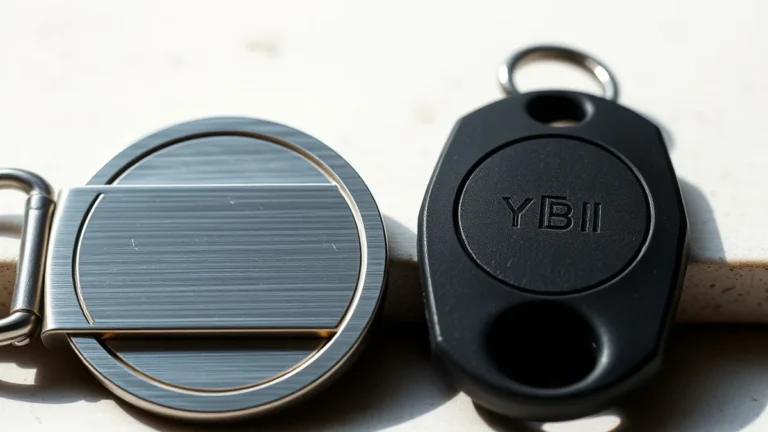
Residents should also be cautious about how they manage their recovery options. Many online services offer recovery through email or phone verification, but these can be vulnerable to interception. Instead, consider using hardware security keys, such as YubiKeys, which provide a physical layer of security that is much harder for attackers to bypass. Registering an emergency backup key and storing it in a secure offline location can provide an additional safety net.
Moreover, it is vital to regularly review and update recovery options for all accounts. This proactive approach can prevent attackers from exploiting outdated recovery methods, ensuring that legitimate users maintain access to their accounts even in the event of a breach.
Related Aegis Lab Briefings: Explore deeper benchmarks in YubiKey Emergency Backup Key Registration & Offline Vault Storage and Automated Personal Data Broker Opt-Out vs State Privacy Deletion Requests.
15-Minute Account Lockdown Protocol
In the event of a suspected data breach, residents can follow this quick 15-minute protocol to lock down their accounts and mitigate potential damage:
- Immediately change passwords for all critical accounts, including email, banking, and social media.
- Enable multi-factor authentication on all accounts that support it.
- Review recent account activity for any unauthorized transactions or changes.
- Contact your bank and credit card companies to alert them of potential fraud.
- Place a fraud alert on your credit report by contacting one of the three major credit bureaus.
- Update security questions and recovery options for all accounts.
- Run a malware scan on your devices to check for any infections.
- Monitor your accounts closely for any unusual activity over the next few weeks.
- Consider using a credit monitoring service to keep an eye on your credit report.
- Educate family members about the breach and encourage them to take similar precautions.
- Document your actions and any communications with financial institutions for future reference.
- Stay informed about the breach investigation and follow any recommendations from local authorities.
- Review and update your privacy settings on social media and other online accounts.
- Consider freezing your credit if you believe your information has been compromised.
- Regularly back up important data to an external drive or secure cloud service.
This rapid response can significantly reduce the risk of identity theft and financial loss following a breach.
Locking credit bureaus, carrier SIM ports, and phishing-resistant passkeys closes the highest-risk consumer attack paths.