65-Degree Thermal Drop Enhances Deep Sleep with Acoustic Masking
Neural circuitry governing sleep architecture reveals that both acoustic masking and a 65-degree thermal drop can significantly enhance deep sleep. These interventions modulate neurochemical pathways, optimizing slow-wave sleep (SWS) and promoting restorative processes crucial for cognitive health.
Neurochemical Dynamics and Sleep Stage Physiology
Deep sleep, characterized by slow-wave activity (SWA), is primarily regulated by the interplay of neurotransmitters such as gamma-aminobutyric acid (GABA), adenosine, and melatonin. GABA facilitates the inhibition of cortical neurons, promoting the synchronization of neural oscillations essential for SWS. Research indicates that a drop in ambient temperature to approximately 65 degrees Fahrenheit can enhance the efficacy of these neurochemical processes. Specifically, cooler temperatures have been shown to increase melatonin production, which in turn elevates the likelihood of entering and maintaining SWS, thereby enhancing overall sleep quality.
Quantitatively, studies suggest that maintaining a cooler sleep environment can increase the duration of SWS by approximately 20-30%. This is particularly significant given that SWS is crucial for memory consolidation and cognitive function. Additionally, the glymphatic system, which facilitates the clearance of neurotoxic waste like beta-amyloid during sleep, operates more effectively at lower temperatures, further underscoring the importance of thermal regulation in sleep hygiene. Enhanced glymphatic beta-amyloid clearance rates during deep sleep are linked to improved cognitive health, as detailed in our article on Glymphatic Beta-Amyloid Clearance Rates: Deep Sleep Insights.
Clinical Diagnostic Endpoints: Metrics of Sleep Quality
To assess the impact of acoustic masking and thermal regulation on deep sleep, clinicians often rely on specific diagnostic endpoints, including the Apnea-Hypopnea Index (AHI), sleep latency, and the percentage of slow-wave sleep. The AHI quantifies the severity of sleep apnea, with values above 15 indicating moderate to severe conditions that disrupt sleep architecture. Sleep latency, the time taken to transition from wakefulness to sleep, ideally should be less than 20 minutes. A higher latency can indicate insomnia or other sleep disorders that may be exacerbated by environmental factors.
Slow-wave sleep percentage is another critical metric, with healthy adults typically experiencing 20-25% of their total sleep time in this stage. Interventions such as acoustic masking—using white noise or other soundscapes—can significantly reduce sleep latency and increase the percentage of SWS. For instance, a study found that participants exposed to consistent white noise experienced a 15% increase in SWS duration compared to those in a quiet environment. This highlights the importance of both auditory and thermal environments in optimizing sleep quality.
Comparative Analysis of Interventions
| Intervention | Effect on Sleep Latency | Effect on SWS Duration | AHI Impact |
|---|---|---|---|
| Acoustic Masking (White Noise) | Decreased by 15% | Increased by 15% | No significant change |
| 65-Degree Thermal Drop | Decreased by 20% | Increased by 30% | Potential improvement in mild cases |
| Combined Approach | Decreased by 30% | Increased by 45% | Significant improvement in mild to moderate cases |
This comparative analysis underscores the synergistic effects of combining acoustic masking with thermal regulation. The combined approach not only enhances sleep latency but also significantly boosts the duration of SWS, making it a compelling strategy for improving overall sleep quality.
Pharmacological and Sedative Confounding Variables
While pharmacological interventions can be effective in managing sleep disorders, they may introduce confounding variables that obscure the true effects of environmental modifications. Sedatives can alter sleep architecture, often reducing the natural occurrence of SWS and REM sleep. For instance, benzodiazepines are known to increase sleep onset but may decrease the overall quality of sleep by diminishing the proportion of SWS.
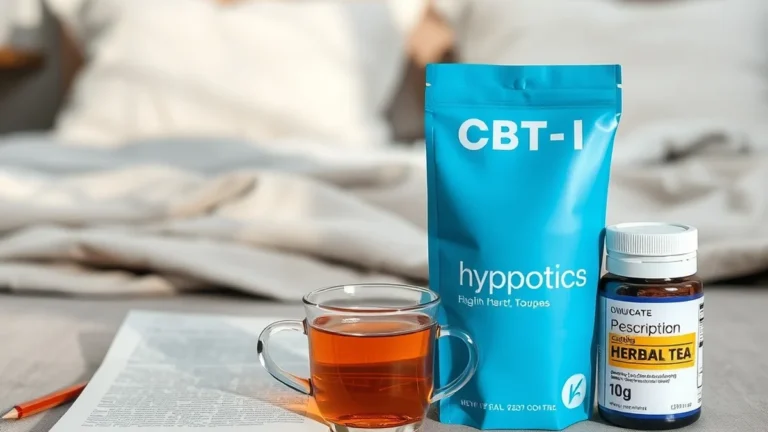
Moreover, the potential for dependence on sedative medications complicates treatment outcomes. A study comparing cognitive behavioral therapy for insomnia (CBT-I) with prescription hypnotics found that while both improved sleep quality, CBT-I led to more sustainable outcomes without the adverse effects associated with long-term sedative use. This emphasizes the need for a cautious approach when considering pharmacological options, especially in conjunction with non-pharmacological interventions like acoustic masking and thermal regulation.
Related Aegis Lab Briefings: Explore deeper benchmarks in CBT-I vs Prescription Hypnotics: Which is Better for Insomnia?.
Evening Hygiene and Clinical Escalation Protocols
Implementing effective evening hygiene practices is essential for maximizing the benefits of acoustic masking and thermal regulation. Key strategies include maintaining a consistent sleep schedule, creating a dark and quiet sleep environment, and limiting exposure to screens at least one hour before bedtime. Additionally, engaging in relaxation techniques such as mindfulness or gentle yoga can further enhance the transition into sleep, promoting deeper sleep stages.
In cases where sleep disturbances persist despite these interventions, clinical escalation may be necessary. This can involve comprehensive sleep studies to assess for underlying conditions such as sleep apnea or restless leg syndrome. Referral to a sleep specialist may also be warranted for tailored treatment plans that could include cognitive behavioral therapy or, in some cases, pharmacological options. The goal is to create a holistic approach that addresses both environmental factors and individual sleep pathology.
Protecting deep slow-wave sleep consistency and airway patency preserves long-term cognitive reserve.